THE IDEA
Ink sticks to grease
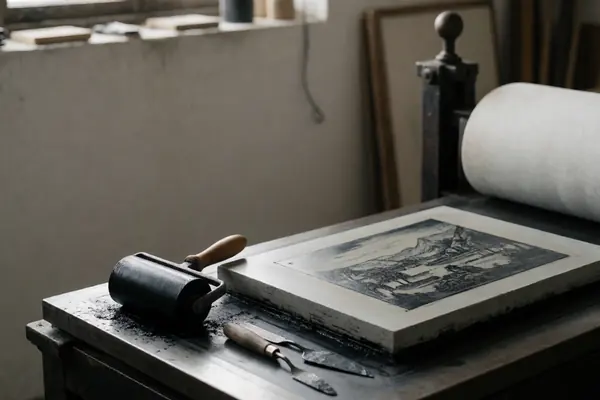
A solution of gum arabic and nitric acid makes the blank areas take water. When the surface is wet, an oily ink roller only leaves ink on the greasy image.
Compare the methods doodleradprinters
PRINTMAKING, EXPLAINED
That simple fact became a way to print.
Compare the methods
SINCE 1796stone, then metal, then offset
Lithography prints from a flat surface. The image is drawn in a greasy medium, the stone or plate is kept wet, and oily ink sticks only where the grease is. Nothing needs to be carved or cut.
Updated
THE SHORT ANSWER
Relief and intaglio print from cut surfaces.
Lithography's image and blank areas sit on the same plane.
THE IDEA
A solution of gum arabic and nitric acid makes the blank areas take water. When the surface is wet, an oily ink roller only leaves ink on the greasy image.
Compare the methodsTHE DRAWING
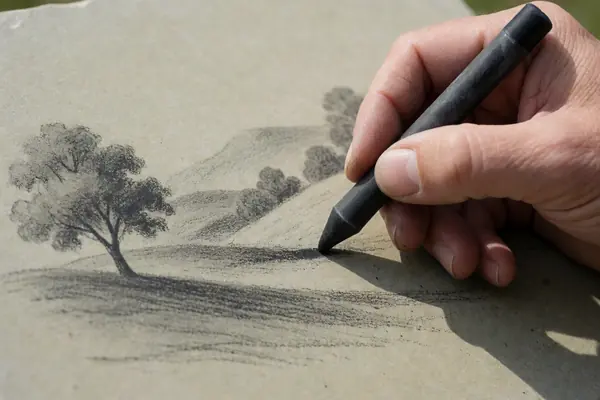
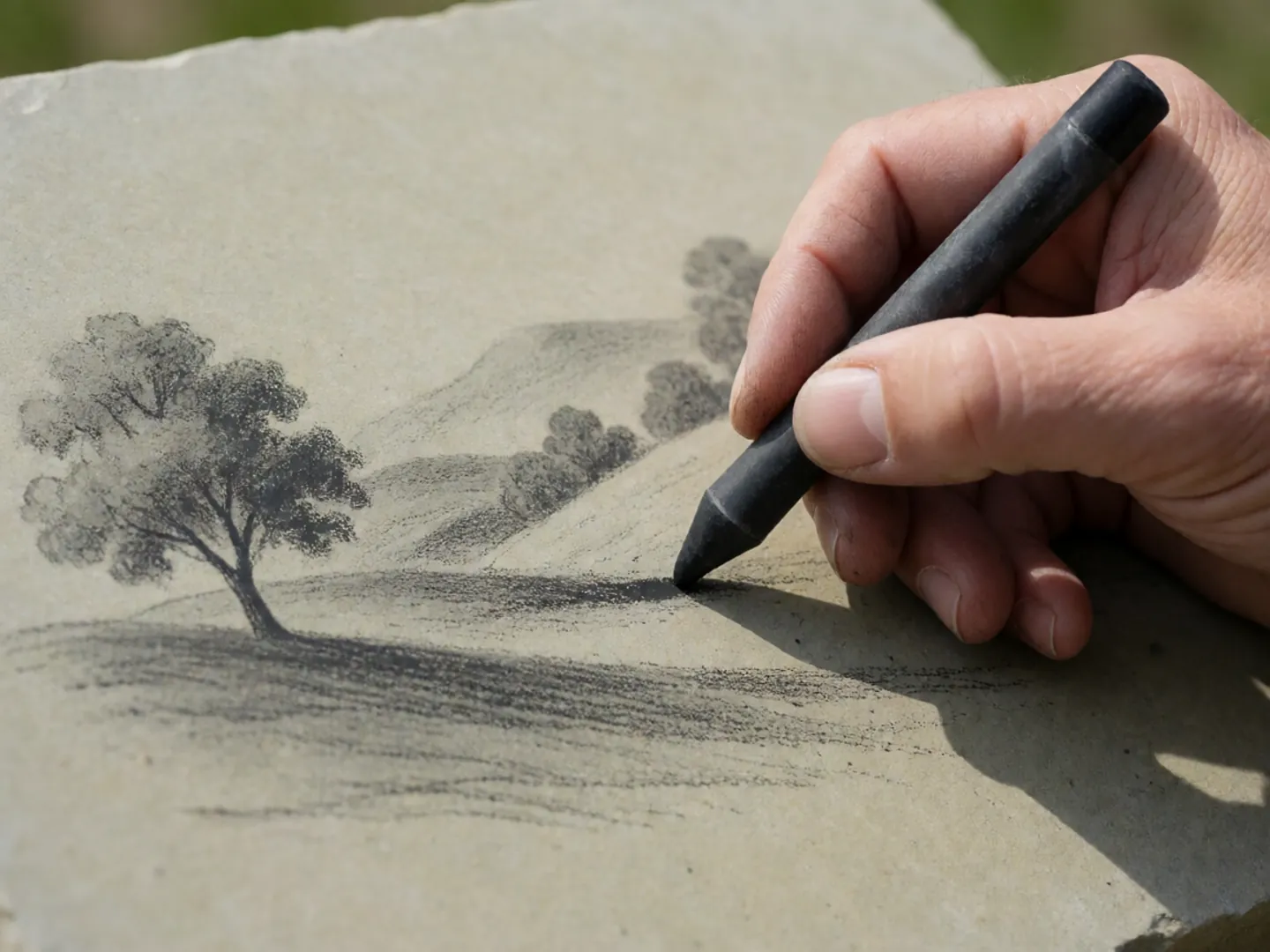
Artists draw straight onto a grained stone or plate with greasy crayons, pencils or a greasy ink called tusche, so prints keep the look of a drawing.
See the numbersTHE PRESS
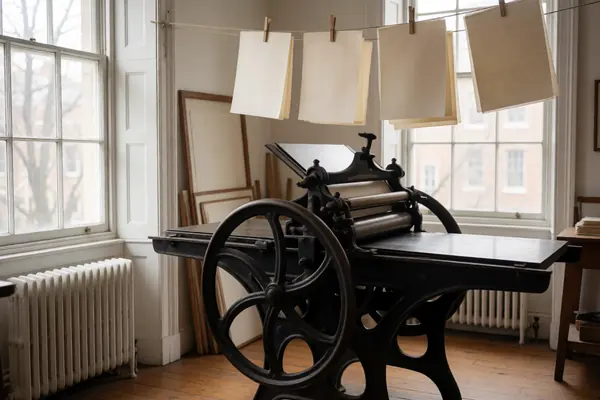
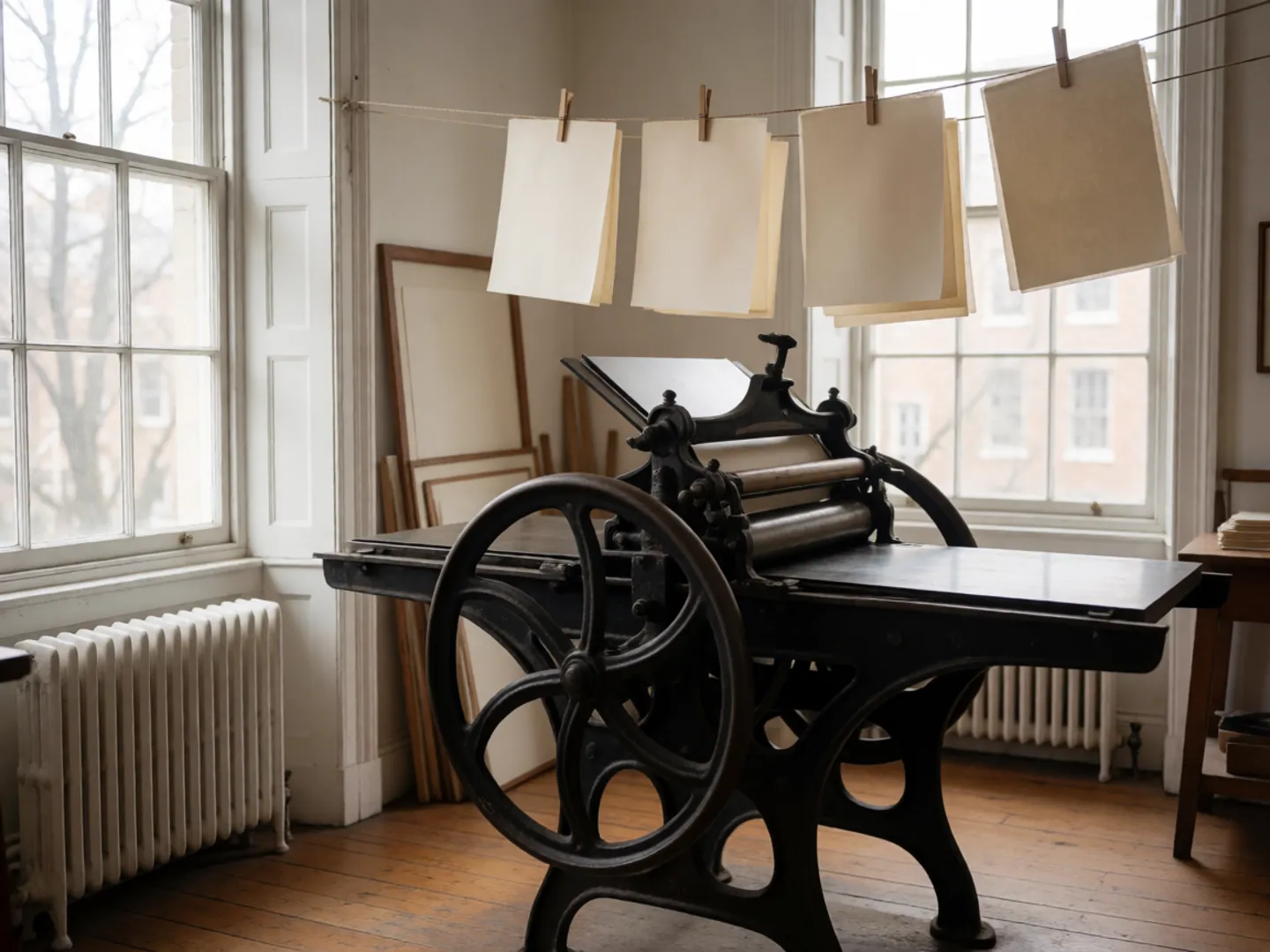
Senefelder later swapped stones for metal plates. That step led towards offset printing, which largely replaced stone lithography in the 20th century.
Read the storyCOMPARE THE METHODS
Pick a printing method to see how its image is made. The bar shows how much the printing surface has to be cut or etched into.
Based on Tate's art terms, the German Patent and Trade Mark Office (DPMA) and the Linda Hall Library.
TWO NUMBERS WORTH KNOWING
One figure from Senefelder's patent,
one from how offset works.
15 years
Length of Senefelder's 1799 Bavarian privilege
The Bavarian Elector granted him a Privilegium exclusivum, in effect a patent, for his method of printing on stone. It proved hard to enforce, even in Munich.
PATENT · DPMA
2×
Times the image is reversed in offset printing
Because the image goes from plate to an intermediate surface and then to paper, it is reversed twice and comes out the same way round as on the plate.
OFFSET · TATE
On a direct stone print the image comes out reversed, so the motif is drawn laterally reversed on the stone. A statue of Senefelder in Berlin shows two putti writing his name backwards, as on a stone.
FOUR SIGNS OF A LITHOGRAPH
These features come straight from the process, as the museum and archive sources below describe.
Crayon on grained stone gives shifts of tone like charcoal or black chalk.
On a direct stone print, the artist draws the motif laterally reversed so it prints the right way round.
Each colour can come from a separate stone, overprinted on the same sheet.
From the 1880s, colour lithography made large mural posters possible.
A PLAYWRIGHT'S FIX
The DPMA tells how Alois Senefelder, a Munich actor and playwright born in 1771, began experimenting because he was annoyed by problems printing his second play. Solnhofen limestone was at hand: such slabs lined the corridors of Munich houses.
The method suited drawings, maps and sheet music and was much cheaper than copper engraving or woodcut. The Linda Hall Library notes that by the 1830s it was widely used for scientific illustration, and that the best stone came from Solnhofen, also famous for fossils.
Questions
The Met explains that the name comes from the words for stone, litho, and mark, graph. Senefelder himself called it chemical printing or stone printing.
Alois Senefelder, a Bavarian actor and playwright, discovered the process in Munich in 1796 while looking for a cheaper way to print his plays.
Traditionally it used Bavarian limestone, but Tate says the surface is now usually aluminium. Senefelder himself received a privilege for metal plates in 1818.
It could print a much wider range of marks and areas of tone than relief or intaglio, and made colour printing easier. Géricault, Delacroix, Whistler, Degas and Toulouse-Lautrec all used it.
A form of lithography in which the image is transferred to an intermediate surface before the paper. The plate never touches the paper, which preserves it.
ABOUT THIS NAME
doodleradprinters.com is part of the DoodleSale portfolio. It isn't in an auction right now, but you can ask about leasing it.